
Microplastics are tiny pieces of plastic (less than 5mm in size) that are now everywhere. They’re in the air, water, food, and even inside our bodies. But what does that mean for our health?
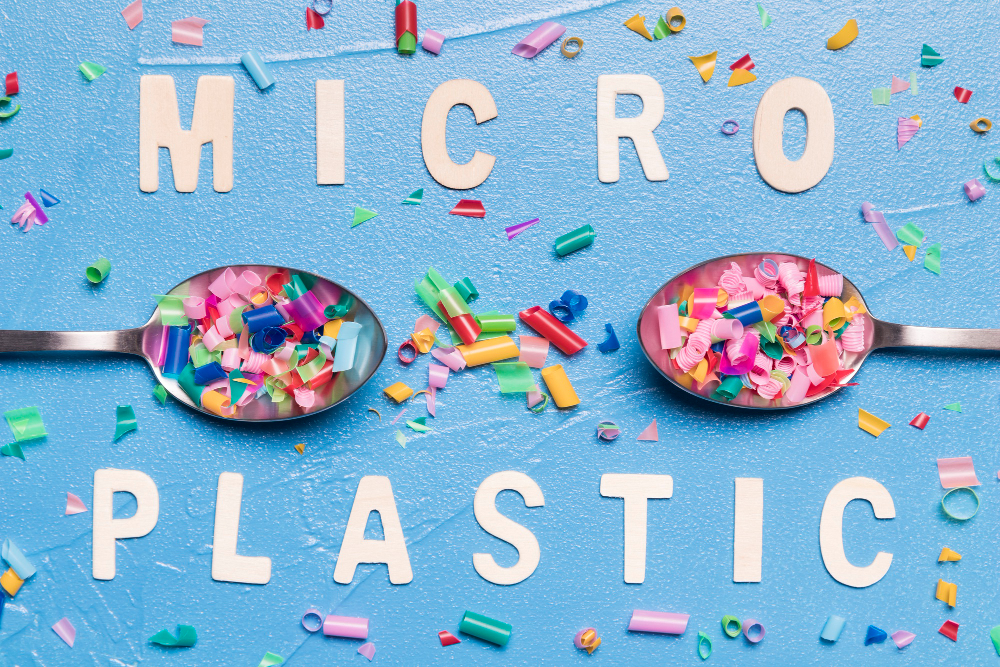
What Are Microplastics?
Microplastics come from two sources:
- Primary microplastics: tiny plastics made on purpose (like old microbeads in face wash).
- Secondary microplastics: pieces that break off larger plastic items over time.
Even smaller particles, called nanoplastics, can enter cells and move through the body more easily.
How Do They Get Into Us?
You can be exposed to microplastics through:
- Food and water – found in seafood, salt, bottled water, tap water, fruits, veggies, and more.
- Air – especially indoors, where fibers from clothing and furniture shed into dust.
- Products – some cosmetics, lotions, and plastic packaging.
What Might They Do Inside the Body?
Scientists are still studying the effects, but early findings show:
- Inflammation and irritation in tissues
- Chemical exposure from additives and pollutants stuck to plastic
- Possible changes to the immune system or gut health
Microplastics have been found in blood, lungs, the placenta, and breast milk, but the long-term impact is not fully understood yet.
Should You Be Worried?
We don’t have all the answers, but here’s what experts agree on:
- Microplastics are everywhere.
- They may pose health risks, especially with long-term exposure.
It’s not about panicking, it’s about being aware!
Simple ways to avoid microplastics
- Drink filtered tap water instead of bottled.
- Avoid heating food in plastic containers.
- Choose natural fabrics when possible.
- Use a microfiber filter for laundry.
- Keep indoor spaces clean and ventilated.
- Use less plastic products
- Remove plastic pollution from the environment
Small changes can make a difference! Microplastics are part of modern life, and research on their health effects is still evolving. For now, staying informed and reducing unnecessary plastic exposure is the best approach.

